All posts by Rodrigo Nemmen

Professor of Astrophysics, Universidade de Sao Paulo

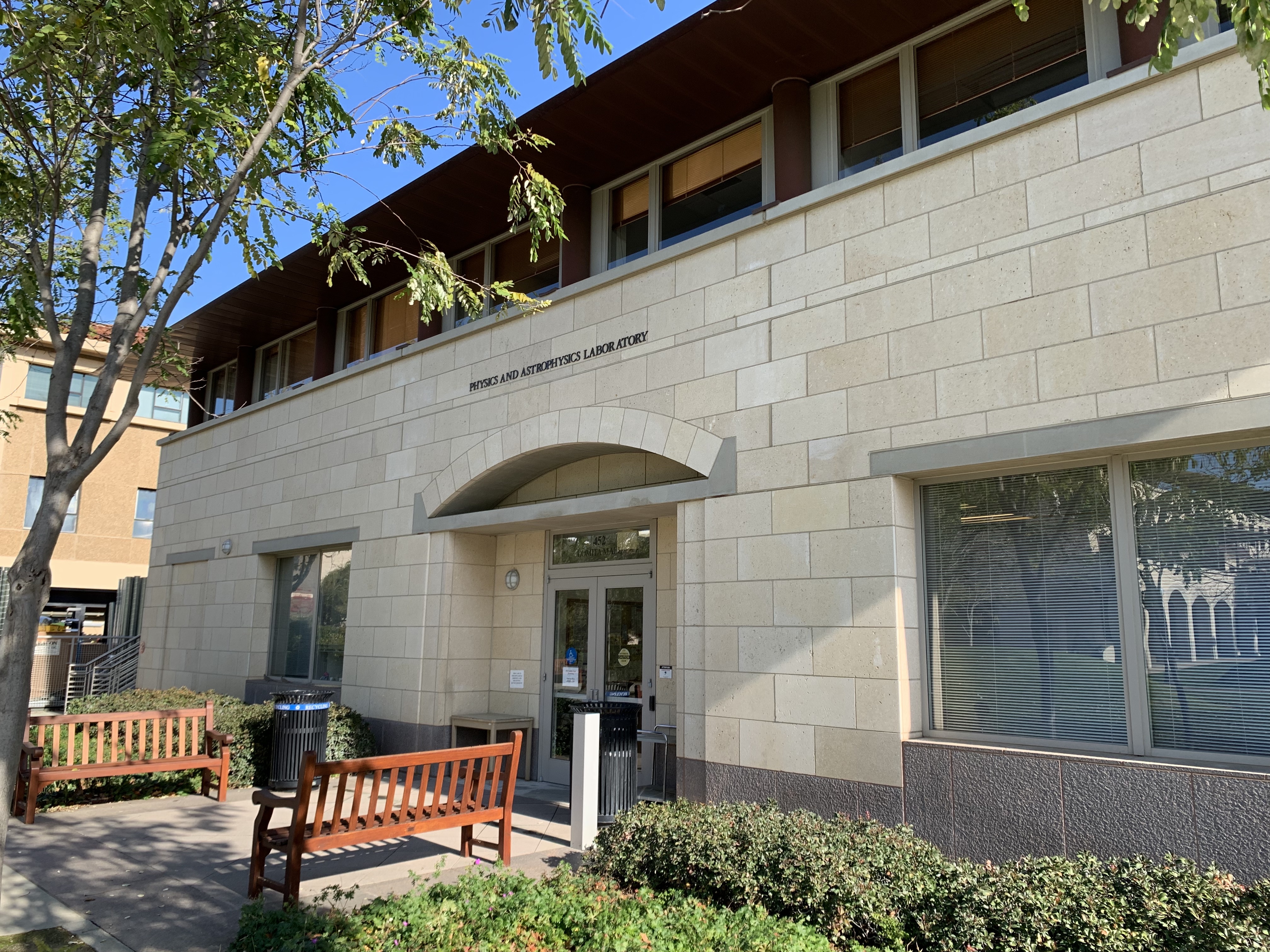
Sabbatical visit at KIPAC Stanford comes to an end

This post is months late, but writing here to say that my sabbatical visit to KIPAC Stanford ended on December last year, after two years as a visiting researcher/professor.

What an amazing and productive visit. So many new friends and colleagues, and new directions in research.

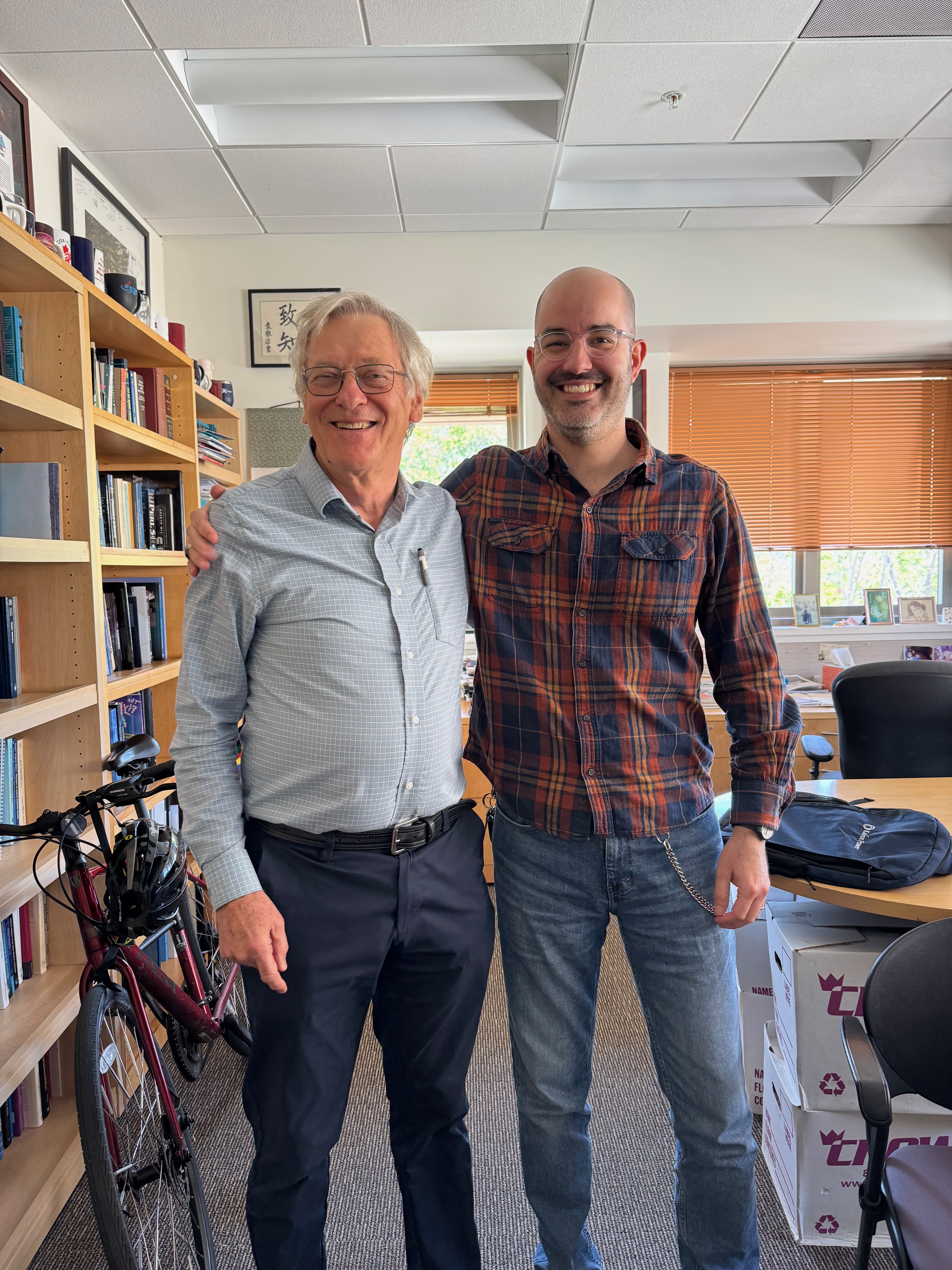
Thank you, Roger, for hosting me! You were an amazing host. I will miss our interactions.

Roger Blandford and Rodrigo Nemmen at KIPAC Stanford, circa 5/2025.

Data seminar at Lawrence Berkeley National Laboratory

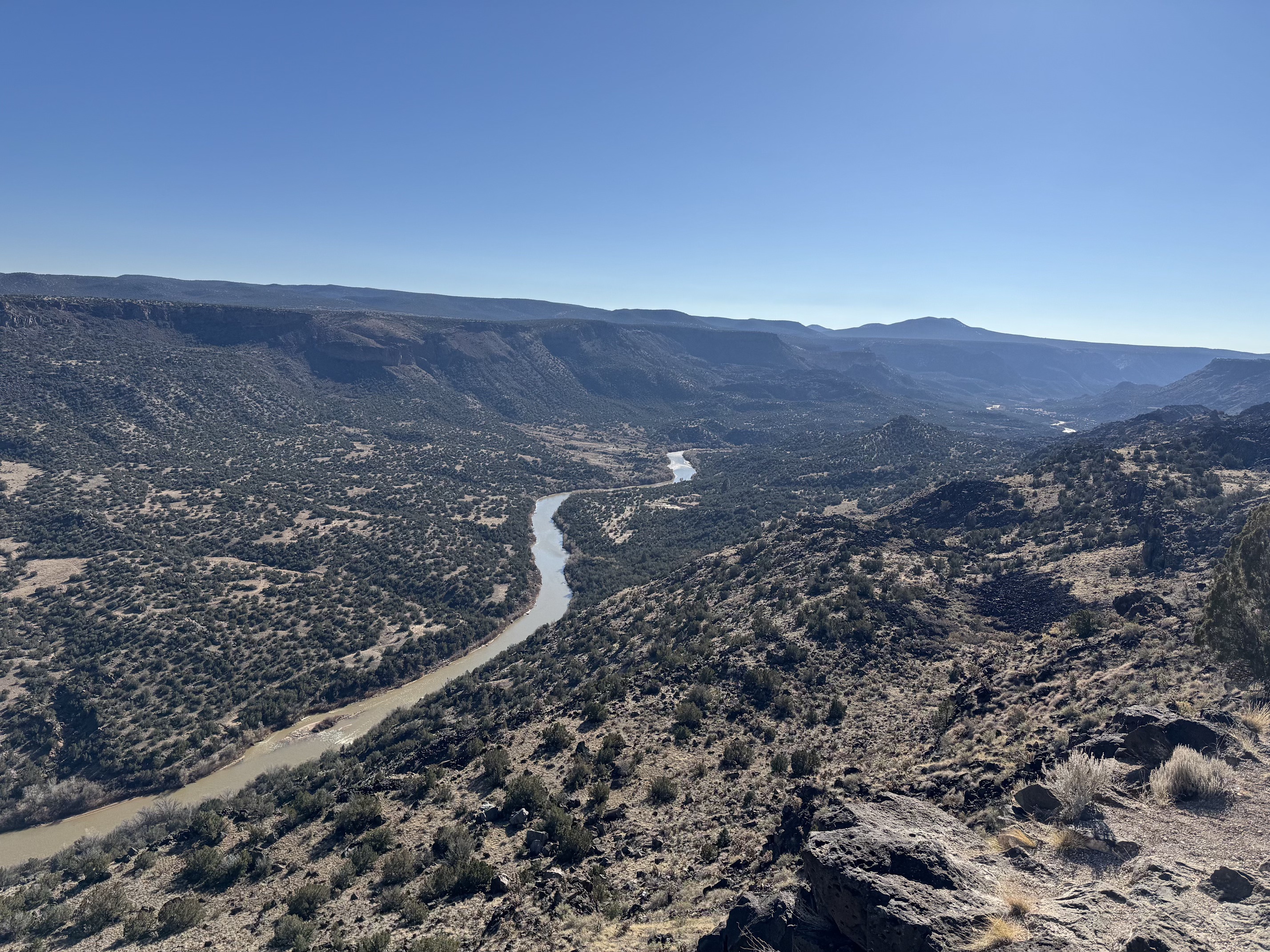
I gave the Data Seminar at the National Energy Research Scientific Computing Center (NERSC) at LBL. My first time there. What a beautiful center, what powerful high-performance computing infrastructure. And what a view of the Bay Area!

I presented my group’s work on applying different machine learning methods to advance our understanding of black holes, including black hole weather forecasting with AI. I am particularly excited about the transformative potential of neural operators for fluid dynamics, and its repercussions for black hole studies.

There were several interesting discussions on the similarities between Earth weather and black hole weather (very little, but there is some common physics), on neural operators, and ideas for follow-up studies with the data team. The talk is now available on Youtube.

After the talk, I visited the Perlmutter GPU cluster, which is surprisingly silent. Thanks, liquid cooling. And met by chance over lunch the legend Fernando Perez, creator of Jupyter.

Many thanks to Steve Farrell for being such a wonderful host.

Leituras sugeridas para estudantes de graduação interessados em iniciação científica na área

Uma pergunta frequente que recebo de estudantes de graduação no início dos cursos de física ou astronomia, interessados em iniciação científica no meu grupo:

Sou estudante do segundo semestre de astronomia no IAG. […] me interessei bastante pelos assuntos estudados no seu grupo de pesquisa, em especial sobre a física dos buracos negros. Gostaria de saber se o senhor tem algum livro ou artigo para indicar para que eu possa introduzir meus estudos na área.

Claro! Há vários artigos acessíveis sobre a astrofísica de buracos negros. Para começar, eu sugiro estes dois artigos populares:

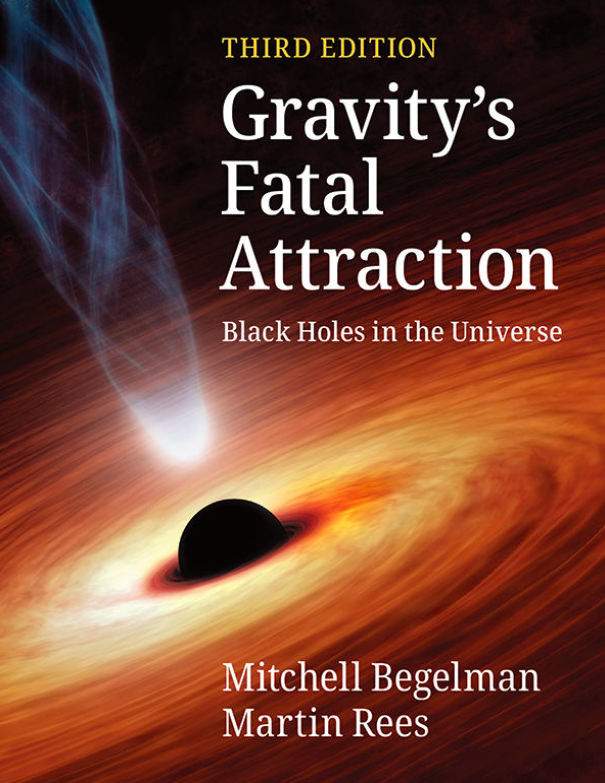
Em seguida, eu sugiro o excelente livro-texto de Begelman & Rees, que faz um apanhado geral sobre a astronomia de buracos negros. O livro aborda desde conceitos básicos até observações recentes:

Begelman, M., Rees, M. Gravity’s fatal attractionTerceira edição, disponível na Amazon BR.

Eu sugiro iniciar pelos capítulos 1-3 do livro, e gradualmente avançar na leitura.

Caso você esteja interessado em outros livros populares sobre o assunto, veja este post.

Now Available: Active Galactic Nuclei Graduate Course Slides

I am pleased to announce the release of my graduate course slides on “Active Galactic Nuclei (AGN)” on figshare, an open-access repository where researchers can preserve and share their academic output.

These slides were used in the August 2020 offering of the course at the Instituto de Astronomia, Geofísica e Ciências Atmosféricas, Universidade de Sao Paulo, and they encompass a comprehensive overview of the observational and theoretical aspects of AGN.

Course Content Highlights

The material covers a gamut of topics within the field of AGN research:

  1. Introduction: A historical perspective and the basic concepts of black hole physics.
  2. AGN zoo: The observational properties of AGNs, including the type I/II classification and the grand unification model.
  3. Supermassive black hole detections: Techniques for measuring SMBH masses, from the shadow of a black hole to reverberation mapping.
  4. Accretion physics: The physics of accretion flows, including various accretion states and models.
  5. Jets: theory: Insights into jet formation and the Blandford-Znajek model.
  6. AGN Feedback: The impact of AGN on their surrounding environments and their role in galaxy formation.
  7. Open questions: Current unsolved mysteries in the field of AGN research.

Accessibility and Sharing

The course slides are accessible to anyone interested in the field – students, educators, and researchers alike. In the spirit of open science and to facilitate the broad dissemination of knowledge, I’ve chosen the “CC BY 4.0” license. This means that you are free to share, copy, and even adapt the material, as long as appropriate credit is given.

How to Access

You can find the slides directly on figshare under the title: “Lecture Slides: Graduate Course on Active Galactic Nuclei”.

I encourage you to use these slides as a resource for learning and teaching, and I hope they will spark further interest and research into the fascinating world of supermassive black holes and active galactic nuclei.

Acknowledgements

Credit for the slides and figures belongs to myself, with due acknowledgments given for adapted content from other sources as appropriate within the slides.

Stay curious, and happy learning!
Sabbatical leave at Stanford University

Beginning on December 9th 2022, I will be on my sabbatical leave at the Kavli Institute for Particle Astrophysics and Cosmology, Stanford University. I cannot express enough how excited I am to visit KIPAC and interact with the researchers there. I am sure this visit will have great scientific payoffs, including new collaborations and projects on black hole astrophysics.

Stay tuned for more news soon!

Participação no podcast Ciência Sem Fim

Ontem tive o prazer de participar do podcast Ciência Sem Fim, do Sérgio Sacani. Fiquei impressionado com a clareza de pensamento do Sérgio, sua organização e energia inesgotável. Três horas de papo sem parar não é mole não, mas o Sérgio faz parecer fácil. 🙂

Gravação no youtube da participação de Rodrigo Nemmen no podcast Ciência Sem Fim, com Sérgio Sacani.

Há também muitos cortes do papo com o Sérgio, disponíveis no canal do Ciência Sem Fim.

Que o podcast continue por muitos anos, trazendo muitos outros pesquisadores. Viva a ciência!