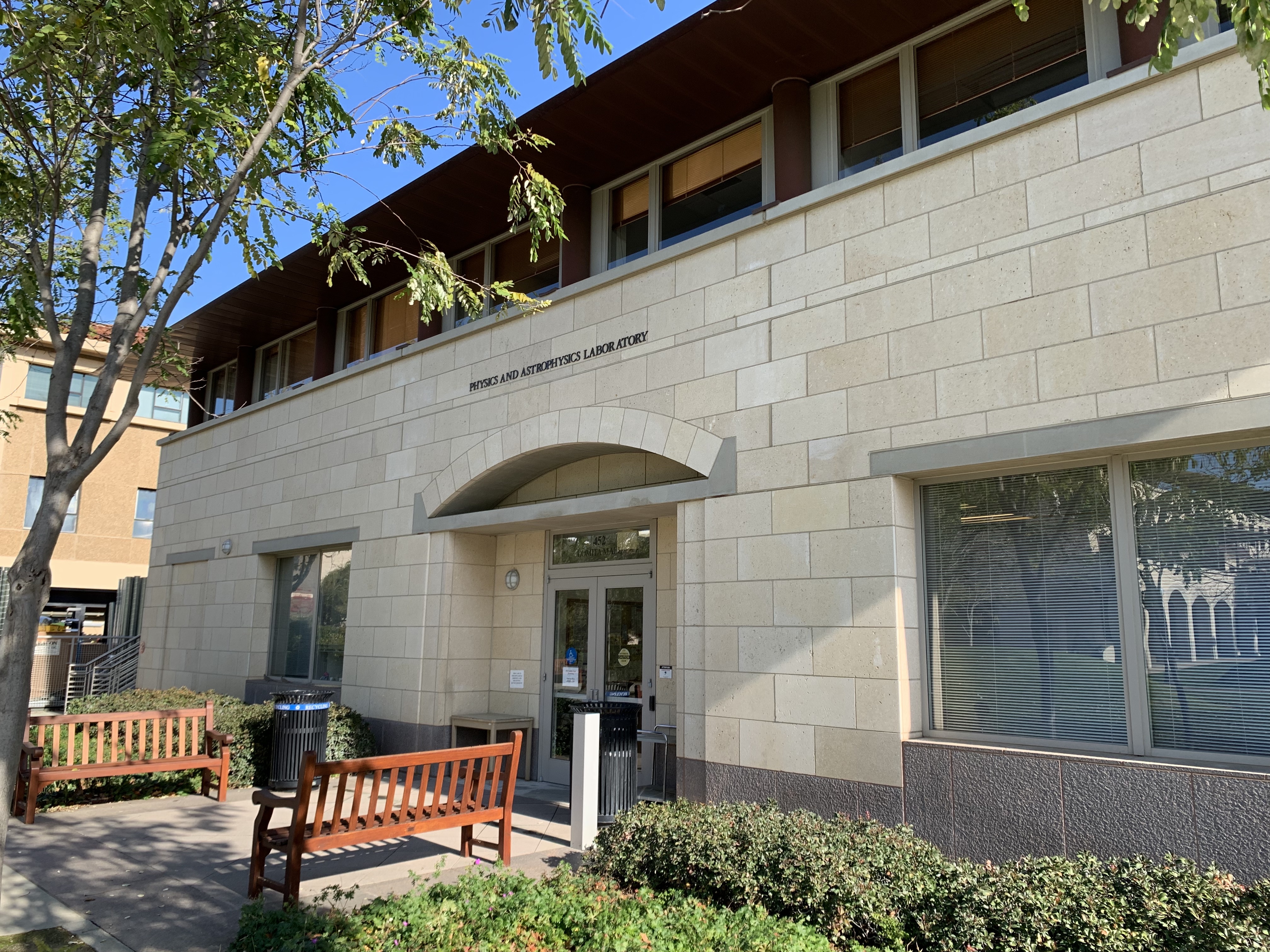
This post is months late, but writing here to say that my sabbatical visit to KIPAC Stanford ended on December last year, after two years as a visiting researcher/professor.
What an amazing and productive visit. So many new friends and colleagues, and new directions in research.
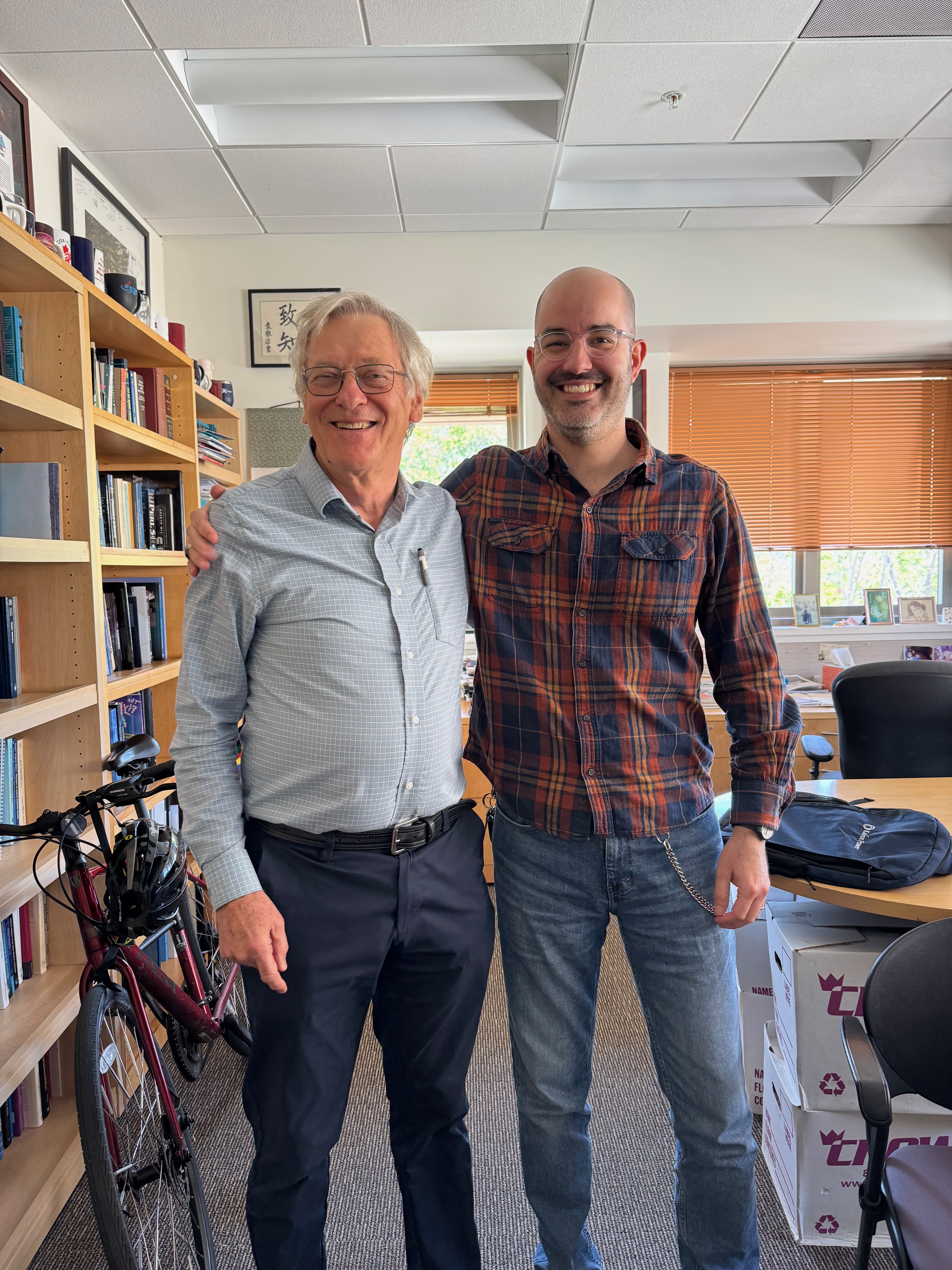
Thank you, Roger, for hosting me! You were an amazing host. I will miss our interactions.
Roger Blandford and Rodrigo Nemmen at KIPAC Stanford, circa 5/2025.
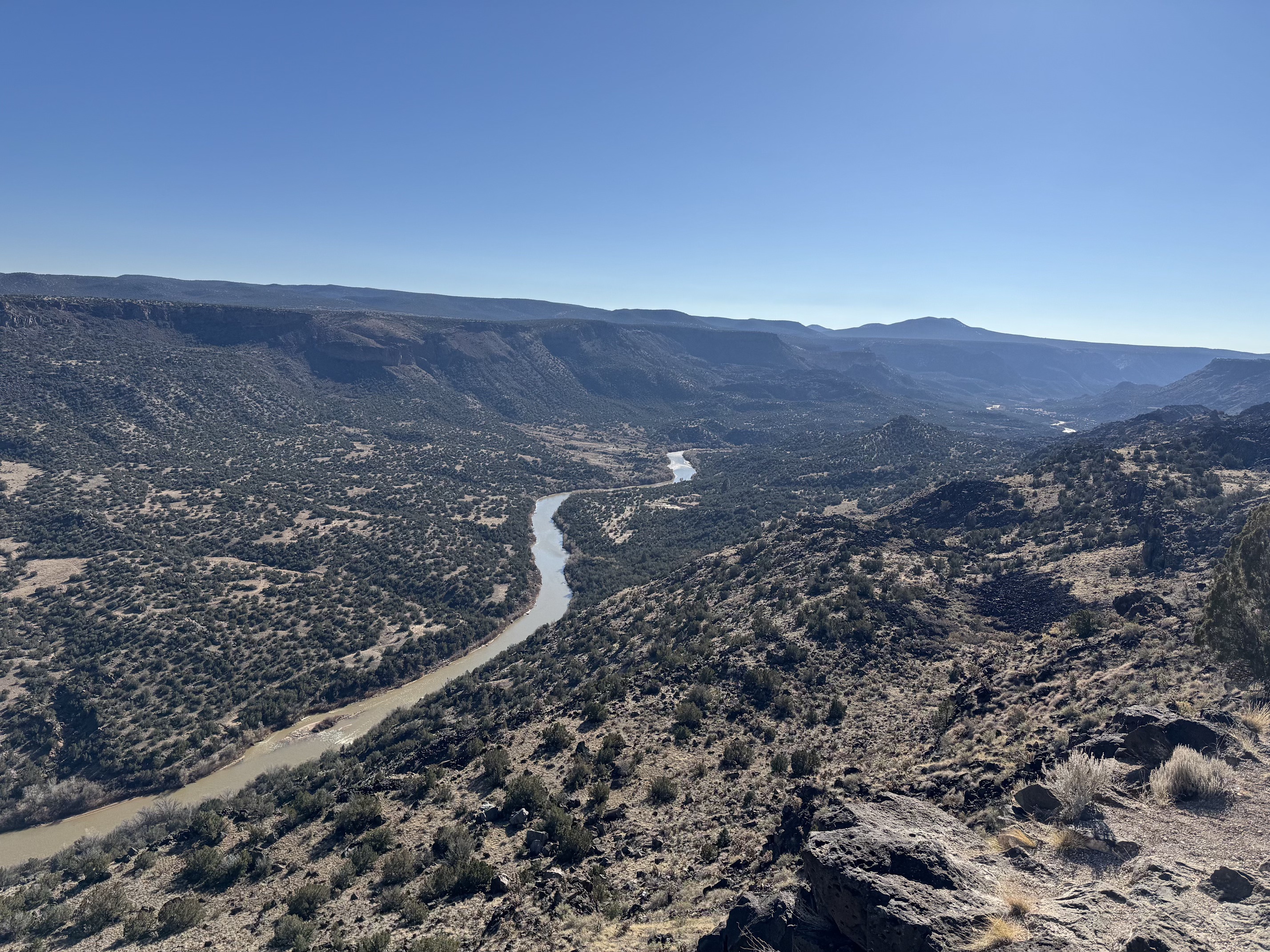
I had the pleasure of visiting Los Alamos last week to give the Astrophysics Distinguished Seminar at the Los Alamos National Laboratory. First time in New Mexico, actually. What a beautiful state!
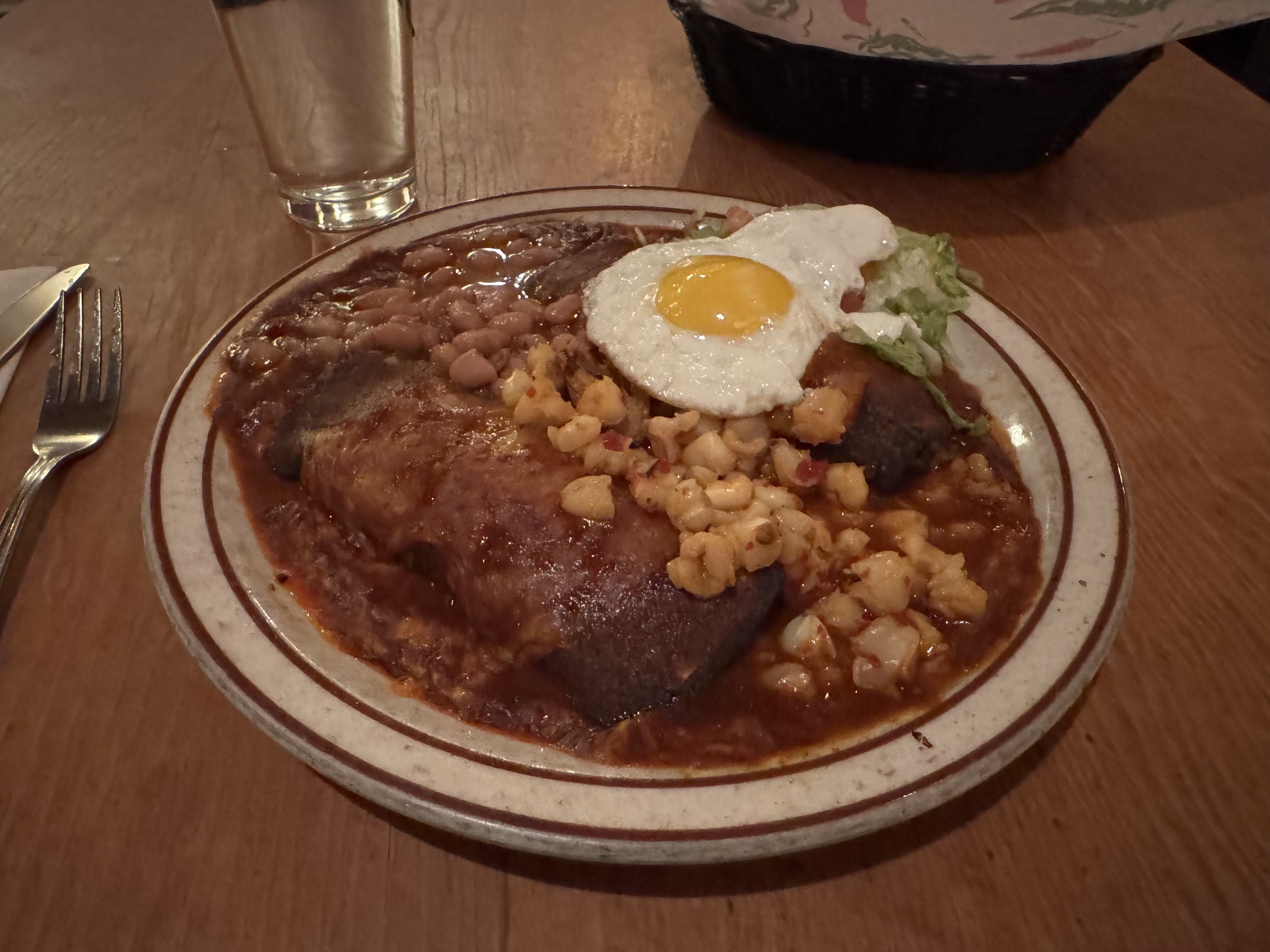
It was great to interact with the folks at the Center for Nonlinear Studies: Alejandro, Jonah, Hyun, Ben, and many others. Thank you for the hospitality and the green chili!
I presented my group’s work on applying different machine learning methods to advance our understanding of black holes, including black hole weather forecasting with AI. I am particularly excited about the transformative potential of neural operators for fluid dynamics, and its repercussions for black hole studies.
There were several interesting discussions on the similarities between Earth weather and black hole weather (very little, but there is some common physics), on neural operators, and ideas for follow-up studies with the data team. The talk is now available on Youtube.
After the talk, I visited the Perlmutter GPU cluster, which is surprisingly silent. Thanks, liquid cooling. And met by chance over lunch the legend Fernando Perez, creator of Jupyter.
Many thanks to Steve Farrell for being such a wonderful host.
These slides were used in the August 2020 offering of the course at the Instituto de Astronomia, Geofísica e Ciências Atmosféricas, Universidade de Sao Paulo, and they encompass a comprehensive overview of the observational and theoretical aspects of AGN.
Course Content Highlights
The material covers a gamut of topics within the field of AGN research:
Introduction: A historical perspective and the basic concepts of black hole physics.
AGN zoo: The observational properties of AGNs, including the type I/II classification and the grand unification model.
Supermassive black hole detections: Techniques for measuring SMBH masses, from the shadow of a black hole to reverberation mapping.
Accretion physics: The physics of accretion flows, including various accretion states and models.
Jets: theory: Insights into jet formation and the Blandford-Znajek model.
AGN Feedback: The impact of AGN on their surrounding environments and their role in galaxy formation.
Open questions: Current unsolved mysteries in the field of AGN research.
Accessibility and Sharing
The course slides are accessible to anyone interested in the field – students, educators, and researchers alike. In the spirit of open science and to facilitate the broad dissemination of knowledge, I’ve chosen the “CC BY 4.0” license. This means that you are free to share, copy, and even adapt the material, as long as appropriate credit is given.
I encourage you to use these slides as a resource for learning and teaching, and I hope they will spark further interest and research into the fascinating world of supermassive black holes and active galactic nuclei.
Acknowledgements
Credit for the slides and figures belongs to myself, with due acknowledgments given for adapted content from other sources as appropriate within the slides.
Beginning on December 9th 2022, I will be on my sabbatical leave at the Kavli Institute for Particle Astrophysics and Cosmology, Stanford University. I cannot express enough how excited I am to visit KIPAC and interact with the researchers there. I am sure this visit will have great scientific payoffs, including new collaborations and projects on black hole astrophysics.
Black holes accrete gas from their surroundings in a chaotic, turbulent manner. This colloquium will describe the pilot application of deep learning for black hole weather forecasting. Our early results indicate that black hole simulations can benefit tremendously from AI. Along the way, I will explain the difference between artificial intelligence (AI), machine learning, and deep learning and why the scientific community is so excited about these topics.
Below are the slides from my presentation, given in late 2021.
Colloquium: The first AI simulation of a black hole.
Marco Aurélio, o imperador do grandioso Império Romano, escreveu nas suas meditações que
Precisamente porque nós podemos nos adaptar, a mente pode adaptar-se e assim converter um obstáculo para as nossas ações em algo que sirva a um objetivo. […] O impedimento a uma ação pode servir para avançar a ação. O que está no seu caminho torna-se o caminho.
Esta é uma lição imortal de que desafios trazem oportunidades, se os olharmos com outros olhos.
Costumo usar os ensinamentos estóicos na minha vida. Ao aplicar eles neste momento histórico de confinamento global causado pelo COVID-19, que impede que as aulas da maior parte das escolas e universidades no Brasil retornem ao “antigo normal”, decidi transformar um impedimento à ação (a quarentena que impede as aulas normais) em oportunidade.
Assim, disponibilizarei todas as aulas da minha disciplina de graduação de relatividade geral e aplicações astrofísicas—que normalmente seriam presenciais e disponíveis somente para um reduzido número de alunos da Universidade de São Paulo—no Youtube.
Acredito que será um investimento importante do meu tempo o esforço de disponibilizar os vídeos no youtube, para permitir a estudantes que nunca teriam o privilégio de estar na USP ter acesso às aulas do curso.
Inscrições, avaliações, material suplementar e acesso ao ambiente Google Classroom da disciplina mencionado na Aula 1 estarão disponíveis somente para os alunos da USP matriculados na mesma.
Pré-requisitos
Esta é uma disciplina direcionada para estudantes no terceiro ou quarto (último) ano regular dos cursos de astronomia ou física.
Os pré-requisitos são:
Curso introdutório de mecânica clássica: leis de conservação, problema da força central, formalismos Lagrangiano e Hamiltoniano
Noções básicas de relatividade restrita (Física 4) e álgebra linear são fortemente recomendadas
Agradecimentos
Ao CNPq através da bolsa de produtividade em pesquisa, que me permite custear a assinatura do software de edição dos vídeos.
À Fundação de Amparo à Pesquisa do Estado de São Paulo (FAPESP) através do Auxílio Jovem Pesquisador 2017/01461-2, que permitiu a compra dos computadores usados na preparação, edição e processamento dos vídeos. Editar vídeos é uma tarefa computacionalmente pesada! Os mesmos computadores também possibilitam a minha pesquisa científica 🙂.
O evento contou com uma conversa entre eu, Christina Helena Barboza (ON), Rogério Rosenfeld e Nathan Berkovits (ambos do IFT-ICTP-SAIFR-UNESP) e Sergio Burgi (IMS).
Foram os resultados obtidos através das bem-sucedidas fotografias feitas por astrônomos ingleses em Sobral, em 29 de maio de 1919, que permitiram a comprovação da teoria da relatividade geral de Albert Einstein, inaugurando um novo momento na história da ciência e da própria humanidade. Neste ano em que se comemoram os cem anos daquele eclipse, um novo esforço internacional colaborativo entre vários observatórios e cientistas levou à primeira imagem a ser registrada de um buraco negro. O painel Ciência em Diálogo: especial Marc Ferrez e o eclipse de Sobral discutiu este amplo arco de conhecimentos que une fotografia e ciência ao longo dos últimos 180 anos.
Ferrez é conhecido do grande público por suas fotografias panorâmicas da cidade do Rio de Janeiro e arredores, feitas com câmeras especiais em negativos de grande formato, técnica praticada por poucos fotógrafos do mundo na época
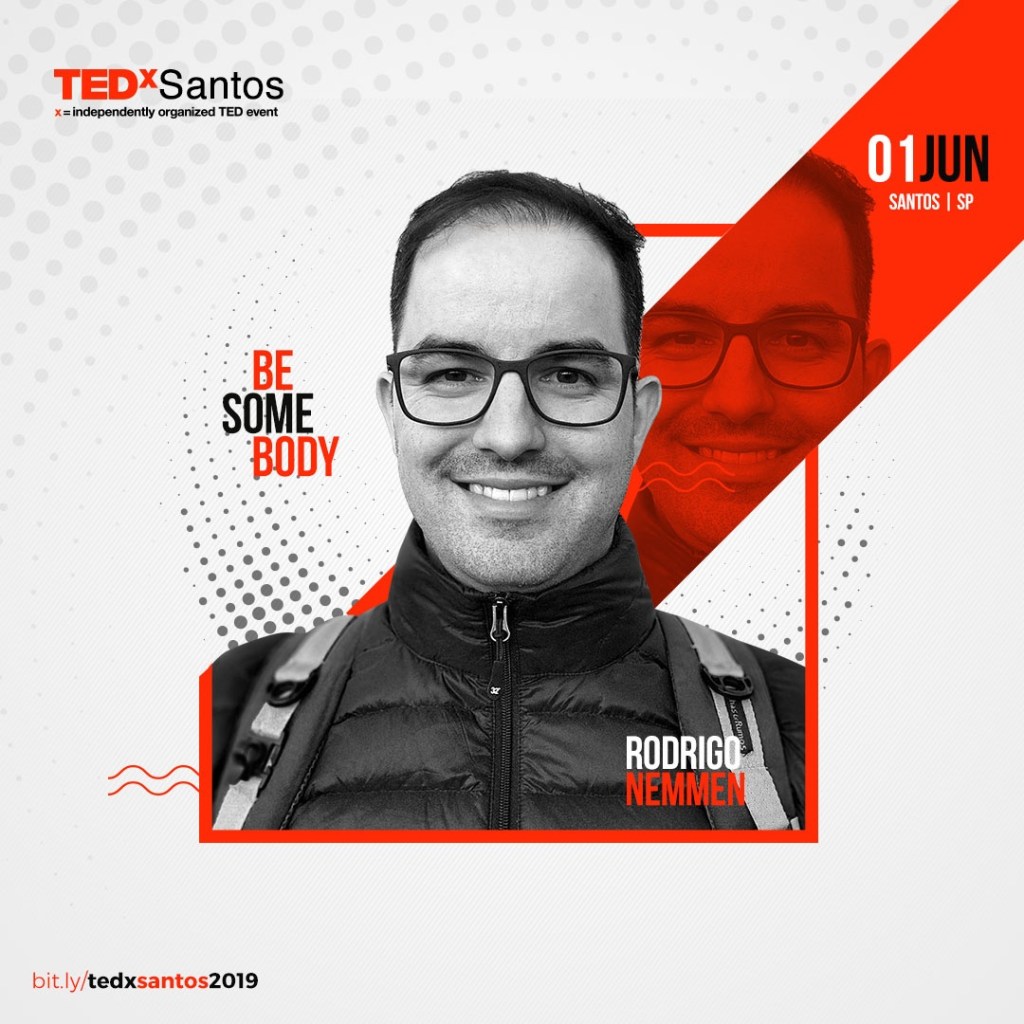
Neste sábado, primeiro de Junho, dei uma apresentação no evento TEDx Santos sobre—surprise, surprise—buracos negros. Mais especificamente, a primeira imagem de um buraco negro, revelada no dia 11 de Abril de 2019. Foi uma experiência interessante e única.
Rodrigo Nemmen, TEDx Santos
O evento foi no belíssimo Teatro Guarany, um prédio histórico construído na época em que Santos experimentava o boom do café paulista.
Rodrigo Nemmen na TEDx Santos. Crédito: Celina Ramirez.
Não tenho ainda previsão de quando o vídeo da palestra será disponibilizado online, devido a alguns problemas técnicos que a equipe de gravação encontrou. Espero que logo!
Foi um momento histórico, o início da era da astronomia dos multi-mensageiros: observação de ondas gravitacionais e luz vindos de uma mesma fonte astronômica! E a resposta ao mistério da origem dos elementos mais pesados que o ferro da tabela periódica.
Espero que tenha passado os principais aspectos da descoberta, ressaltando a participação de muitos astrônomos no Brasil em vários estados—RN, RJ, SP, SC e SE—e em várias instituições—INPE e UFRN (times do LIGO/VIRGO), e USP, ON, UFRJ, UFSE e UFSC (contrapartida eletromagnética).
Agora tem o trabalho—prazeroso diga-se de passagem—de ler os vários artigos publicados sobre o evento. Foram mais de sessenta artigos publicados no PRL, ApJL, Nature e Science, reportando os resultados das análises das ondas gravitacionais e observações eletromagnéticas desde rádio até raios gama.