No próximo Sábado nós teremos na USP o maior evento de divulgação científica do ano: Virada Cientifica (clique no link para ver a programação completa). Haverá várias palestras e atividades muito legais.
Sobre astronomia, teremos por exemplo:
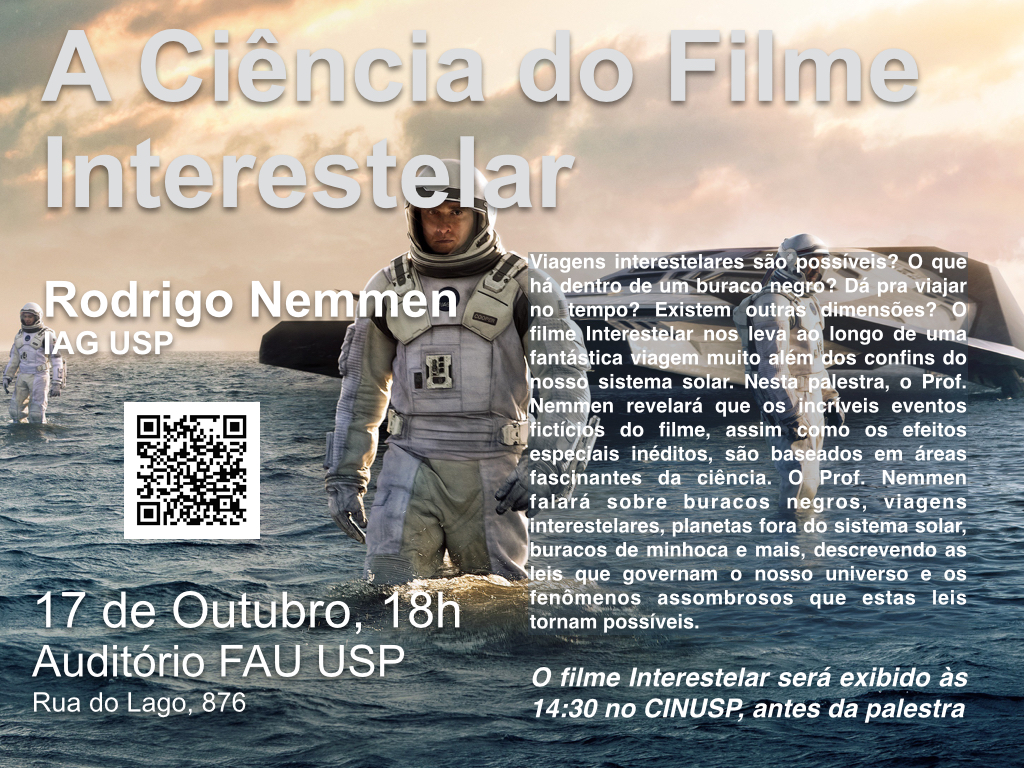
§ A ciência do filme Interestelar, 18h na FAU – o filme será exibido no CINUSP às 14h30, com tempo de sobra para quem quiser ver os dois
§ A procura de uma Terra 2.0 e de um Sistema Solar 2.0, 14h no IAG
§ Origens da vida num contexto cósmico, 17h na FAU
Prof. Pastoriza played a key role in brazilian astronomy. She joined the physics department at UFRGS in 1978 and actually introduced extragalactic astronomy in the south of Brasil. She was one of the few people working on this subject in the country at that time. She has been very active in research in the last forty years and advised a generation of brilliant astronomers including Thaisa Storchi Bergmann, Eduardo Bica and Kepler Oliveira.
I am her scientific grandchild since she was the advisor of my phd advisor, Prof. Storchi Bergmann. I am very honoured for following her footsteps.
With Ana Chies Santos (UFRGS), Roderik Overzier (ON) and Arianna Cortesi (IAG USP) at the annual meeting of SAB in Ouro PretoWith Miriani Pastoriza (UFRGS) at the annual meeting of SAB in Ouro PretoWith Maria de Fátima (UFRGS), Kepler de Oliveira (vice-president of SAB) and Marcos Diaz (president of SAB) at the annual meeting of SAB in Ouro Preto
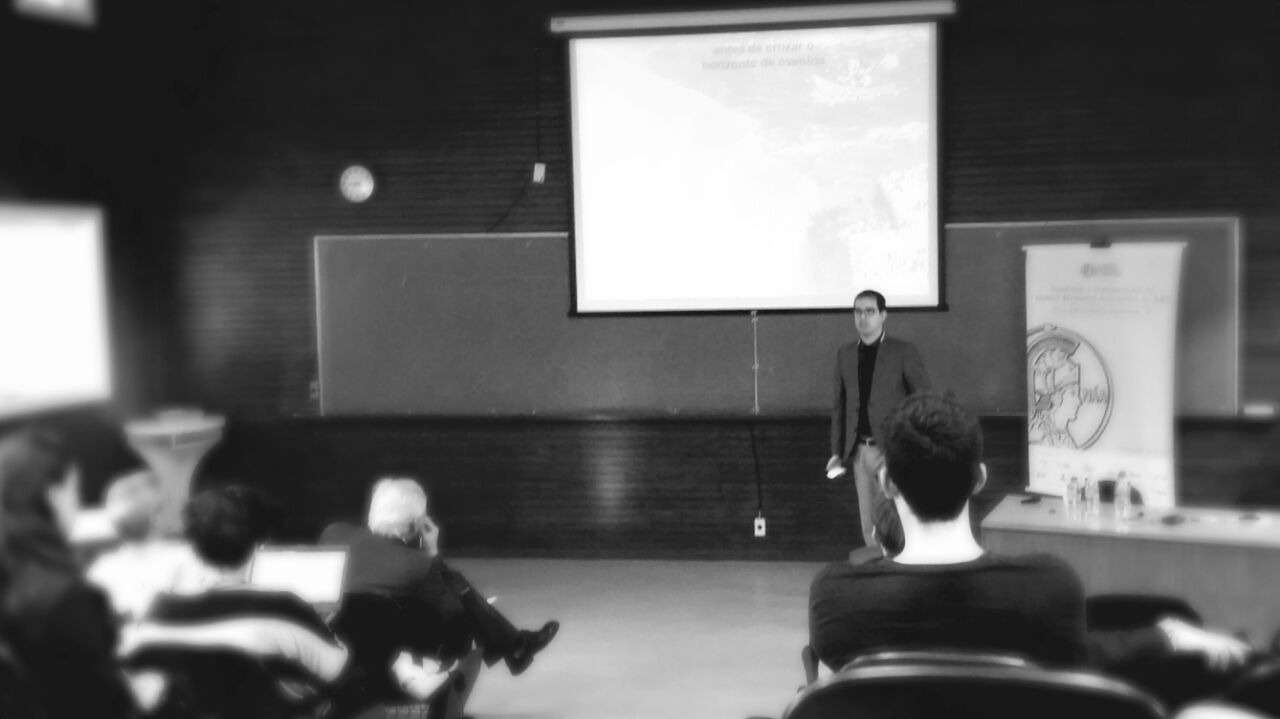
Nesta semana haverá o evento de Diplomação dos Membros Afiliados da Academia Brasileira de Ciências, período 2015-2019 (eu fui um dos agraciados com a nomeação). Após a cerimônia de diplomação dos novos Membros Afiliados, haverá uma reunião cientifica com apresentação de trabalhos pelos novos membros.
We would like to invite you to the First Brazilian CTA Collaboration Meeting that will be held in August 20-21st, 2015 at Universidade de Sao Paulo – Instituto de Astronomia, Geofisica e Ciencias Atmosfericas (IAG-USP).
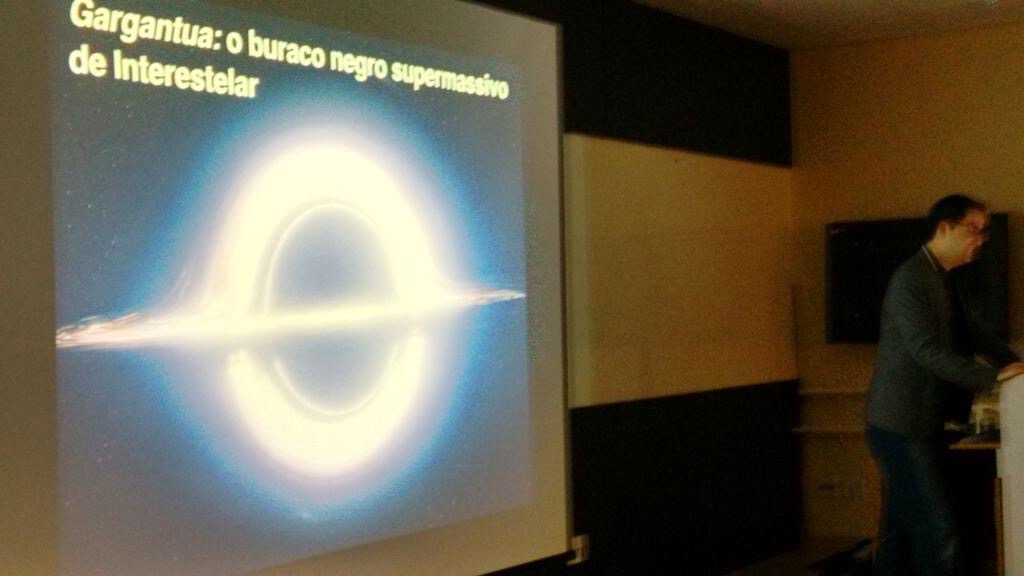
Viagens interestelares são possíveis? O que há dentro de um buraco negro? Dá pra viajar no tempo? Existem outras dimensões? O filme Interestelar nos leva ao longo de uma fantástica viagem muito além dos confins do nosso sistema solar. Nesta palestra, o Prof. Nemmen revelará que os incríveis eventos fictícios do filme, assim como os efeitos especiais inéditos, são baseados em áreas fascinantes da ciência. O Prof. Nemmen falará sobre buracos negros, viagens interestelares, planetas fora do sistema solar, buracos de minhoca e mais, descrevendo as leis que governam o nosso universo e os fenômenos assombrosos que estas leis tornam possíveis.
Onde?
20 de Maio, 19h, Auditório do IAG. O filme Interestelar será exibido às 15:30, antes da palestra.
I am attending this week a workshop on scientific computing hosted by the Núcleo de Astrofísica Teórica at Universidade Cruzeiro do Sul, São Paulo. Very nice event and I am learning a lot. Some of the highlights so far:
Helio Rocha-Pinto (Observatório do Valongo, UFRJ) gave us a very nice summary of astrostatistics, i.e. application of different statistical methods to astronomical data. It is always good to hear somebody very knowledgeable on the subject talking about things you used in the past. He focused on using R and I am increasingly convinced I should learn to be fluent in R for astronomical purposes.
Paulo Penteado (Northern Arizona University) has been telling us about parallelization methods beginning with vectorization, then moving on to OpenMP (memory shared) and ending in MPI (distributed memory). Paulo is extremely knowledgeable on the subject. He began describing the basics of the subject and will give us practical details on implementing openmp and mpi in your own code.
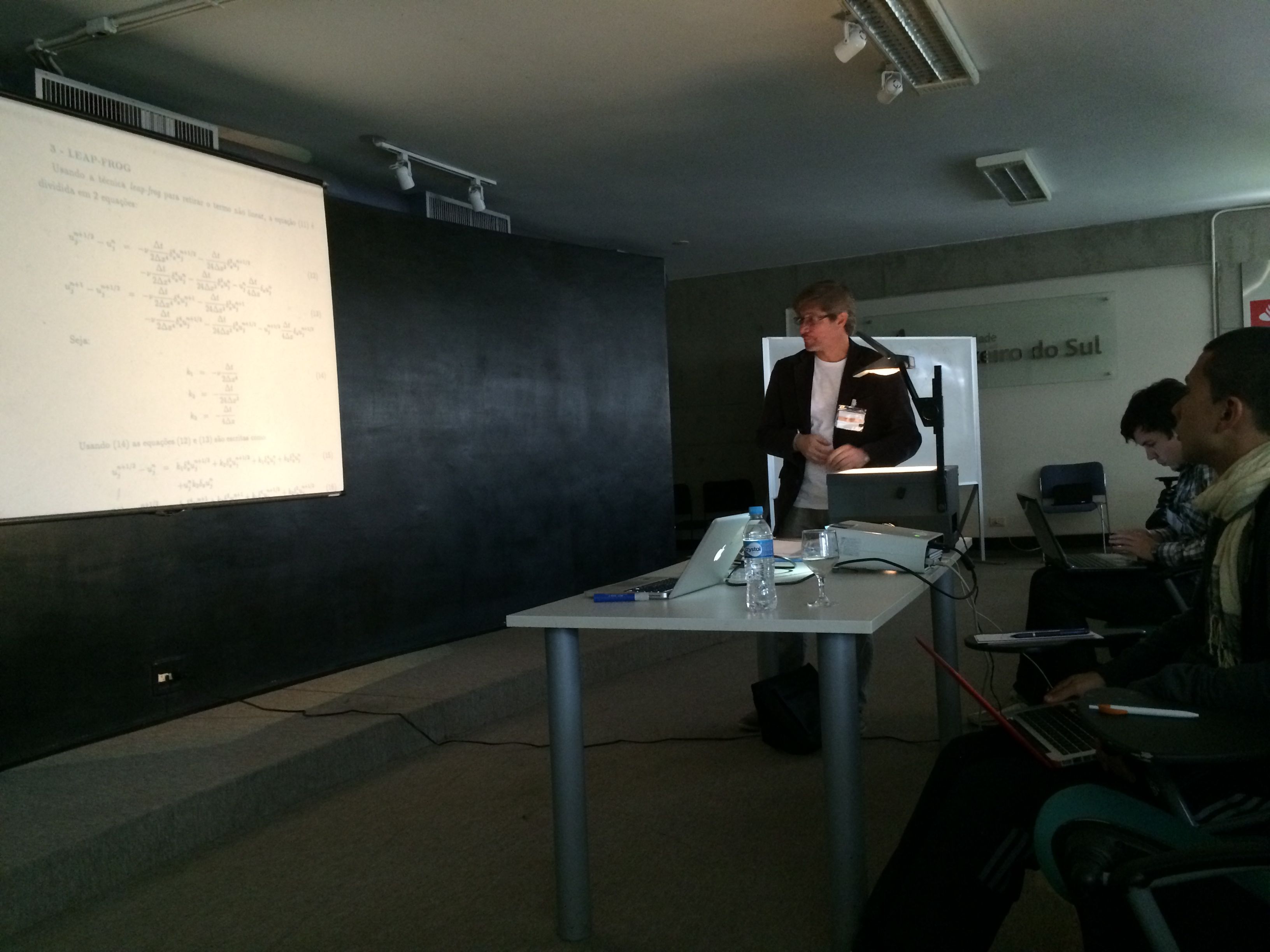
Reinaldo Rosa (INPE) spoke about numerical methods for cosmological simulations, starting with methods for solving hydrodynamics. He even used, at some point, an old-fashioned — some would call vintage — slide projector to describe how diffusion arises from the Navier-Stokes equation.
Reinaldo Rosa (INPE) talking about diffusion using an old fashioned slide projector




 Rodrigo Nemmen's Homepage